Author: greenstrings2029

  • Introduction to the work: The Sun Comes Out Joyfully

    Introduction to the work: The Sun Comes Out Joyfully

    “The Sun Comes Out Joyfully“ (Chinese: 太阳出来喜洋洋) is a widely known classic Chinese folk song originating from the eastern region of Chongqing (historically a part of Sichuan Province). It belongs to a traditional musical genre known as the “Shizhu Luo’er Tune”. The song was adapted and written by the Chongqing musician Jin Gu in 1942, who based it on local folk melodies. 

    Basic Information

    • Creator: Jin Gu (Music & Lyrics) 
    • Creation Year: 1942 
    • Musical Style: Southwest Chinese folk song, mountain song style 
    • Accolades: It is featured in the Anthology of Chinese Folk Songs. The ancestral art style (“Shizhu Luo’er Tune”) was added to China’s National List of Intangible Cultural Heritage, and the song itself has been recognized globally as a masterpiece of traditional Chinese folk music. 

    Artistic Features & Content

    • Perspective: Written from the first-person perspective of a woodcutter. It vividly portrays the optimistic, content, and cheerful spirit of mountain workers during their daily labor.
    • Structure & Padding Words: The song uses the phrase “The sun comes out” to set the scene and evoke an upbeat atmosphere. A distinguishing feature is its rhythmic padding words (nonsense syllables) like “Luo’er” and “Langlangche Guangche”. These sounds simulate the rhythmic movements of chopping wood and balancing shoulder poles, providing a lively tempo.
    • Melody: It combines the energy of river-man chants (Chuanjiang Haozi) with the fluidity of mountain folk tunes, creating a simple, catchy, and high
  • Introduction to the work: Blossom Under the Full Moon

    Introduction to the work: Blossom Under the Full Moon

    “Blooming Flowers and Full Moon” is one of the most celebrated and timeless masterpieces of Chinese traditional instrumental music. Composed originally in 1935 by the legendary Chinese musician Huang Yijun (at just 20 years old), it began as a short piece heavily influenced by the Jiangnan Silk and Bamboo (江南丝竹) regional tradition. In the mid-20th century, the visionary master conductor Peng Xiuwen adapted it into a grand national orchestral arrangement, which dramatically enhanced its rhythmic vitality and instrument variety, elevating it into a definitive classic of modern Chinese orchestral repertoire. 

    I. Comprehensive Musical Style & Structure Analysis

    The piece expertly achieves a seamless fusion between traditional Chinese modal aesthetics and Western structural frameworks, creating a highly scannable yet intricate architectural form:

    • Ternary Formal Structure (ABA’): The work utilizes a highly structured Western classical ternary form—specifically, a single three-part form with a recapitulation.
    • The Traditional Five-Tone System: Grounded purely in the Chinese traditional pentatonic scale (Gong, Shang, Jue, Zhi, Yu / 宫、商、角、徵、羽), the melody carries an undeniably authentic Chinese color. It wonderfully pairs the delicate, fluid, and flowing characteristics of Southern Chinese folk styles with the proud, bold, and energetic sonic profiles of Northern traditions.

    II. Artistic Imagery and Cultural Iconography

    The aesthetic mastery of “Blooming Flowers and Full Moon” lies in its ability to translate visual metaphors deeply embedded in Chinese literature into pure acoustic imagery:

    • Visual-Acoustic Translation: The music masterfully creates a tone poem of a pristine spring night. The smooth, sustained string legatos evoke the shimmering, peaceful glow of a massive silver moon casting light through moving clouds. Concurrently, the fluttering ornaments of the bamboo flutes mimic a soft evening breeze rustling through heavy, fragrant floral branches. 
    • The Metaphor of Completeness: In Chinese cultural psychology, the title is a sacred idiom. “Blooming Flowers” (花好) reflects life peaking in breathtaking beauty and vibrant prosperity, while the “Full Moon” (月圆) acts as the supreme symbol of mathematical perfection, harmony, and flawless human reunion. 
    • The Pulse of Cultural Celebration: Because its energetic, uplifting 2/4 time signature and robust brass/percussion dynamics generate an undeniable sense of collective euphoria, the piece has moved far beyond the concert hall. It has become an essential cultural anthem across the globe, routinely played as the signature encore or grand finale during the Lunar New Year, the Mid-Autumn Festival, and highly prominent diplomatic gala events to wish the world peace, unity, and a flourishing age.

  • The story of our uniform

    The story of our uniform

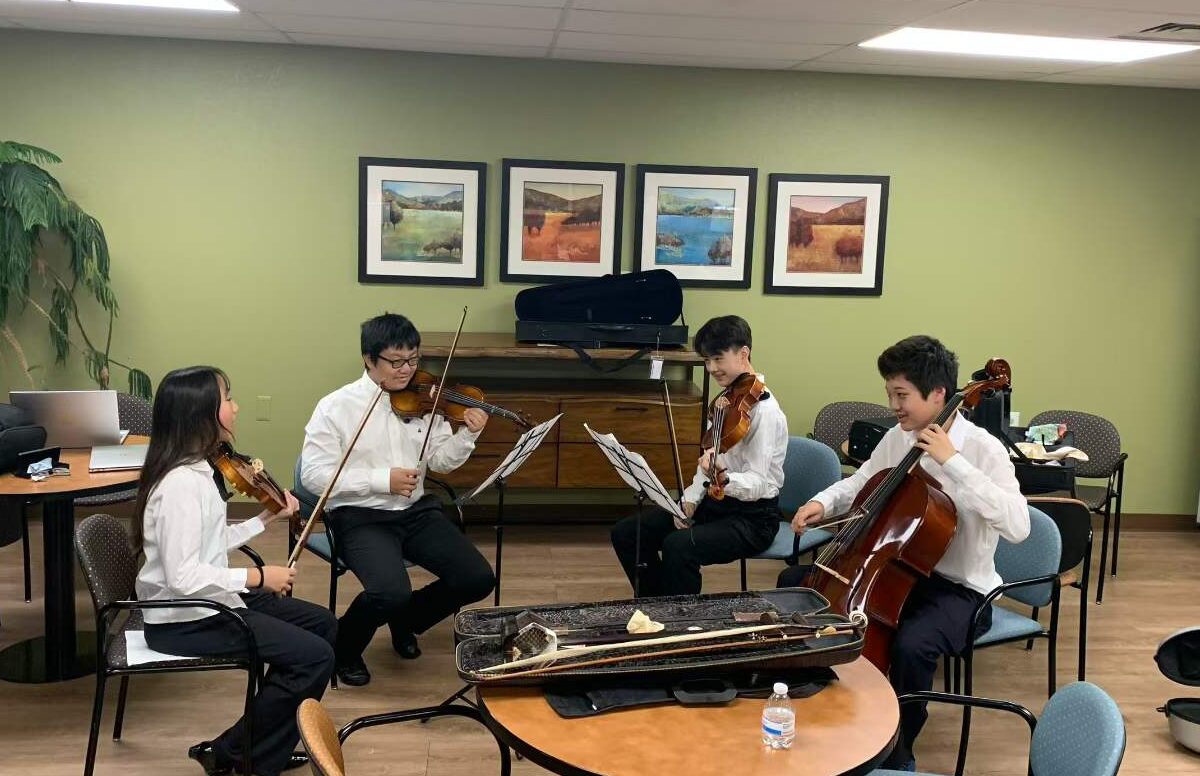
    The small rehearsal space in the Gao home was filled with the warm, resonant tones of two violins, a viola, and a cello. Edward Gao, Edwin Liang, Jason Lu, and Christina Zhang—the four members of the Green Strings Quartet—were huddled over a tablet screen, reviewing the design for their upcoming performance attire.

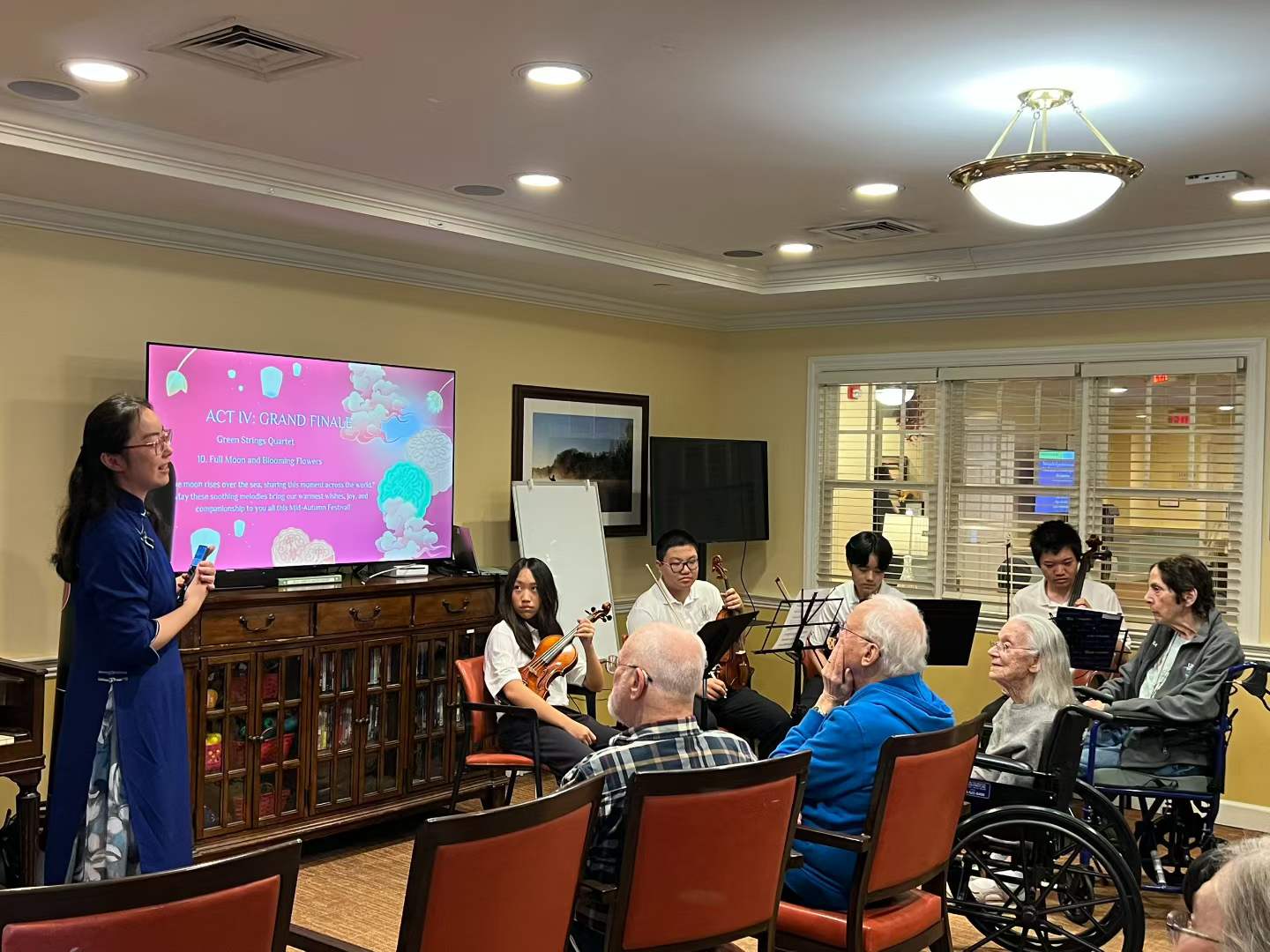
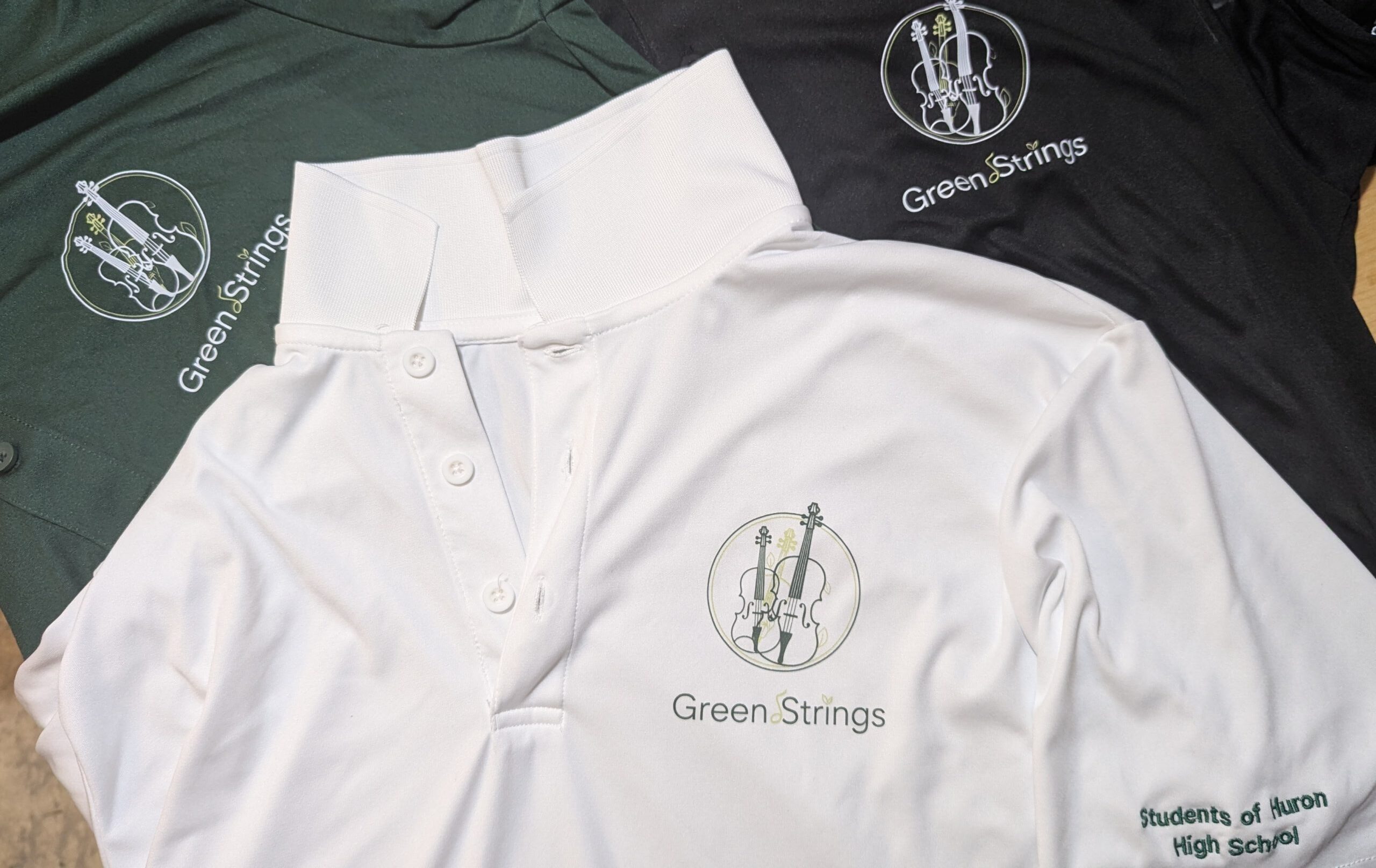
    As the student-led group began booking performances at senior centers, hospice care facilities, and community halls across Ann Arbor, they recognized the need for a unified, professional appearance. Eager to honor the school community that had shaped them, the quartet included the official Huron High School logo on their custom polo mockup.

    Jennifer Zhang, acting on behalf of the quartet’s parents, reached out to the Principal to share the group’s community service efforts and request formal approval to use the school’s crest.

    The response from the Principal praised the students’ dedication to local senior residents, but it also introduced a critical policy distinction:

    Any group wishing to represent Huron High School as a school-affiliated club or activity must first be approved as a school-sponsored organization… If the group is not school-sponsored, it must be clearly communicated in all materials and representations that the activity is not affiliated with or sponsored by Huron High School or AAPS.

    The distinction sparked a constructive dialogue. The students had spent months volunteering their time and were planning fundraising performances to split proceeds between the Huron High School Music Department and C.S. Mott Children’s Hospital. Rather than viewing the policy as a setback, the group used it as a guide to establish clear boundaries between school-sponsored entities and independent student initiatives.

    Through a series of detailed email exchanges, the Principal outlined the guidelines for non-sponsored groups, suggesting approved phrasing that acknowledged the students’ school background without implying official district oversight.

    The parents and students established a clear framework to ensure full compliance:

    • Apparel Identification: The polo shirts were updated to read “Huron Students String Quartet,” capturing their school pride while remaining policy-compliant.
    • Branding Integrity: Official school logos and trademarked crests were removed from all apparel and media.
    • Operational Oversight & Transparency: A four-parent advisory board was formed to oversee safety and logistics. The group committed to using GoFundMe for transparent donation tracking and added clear disclaimers to their website and concert programs clarifying their independent status.

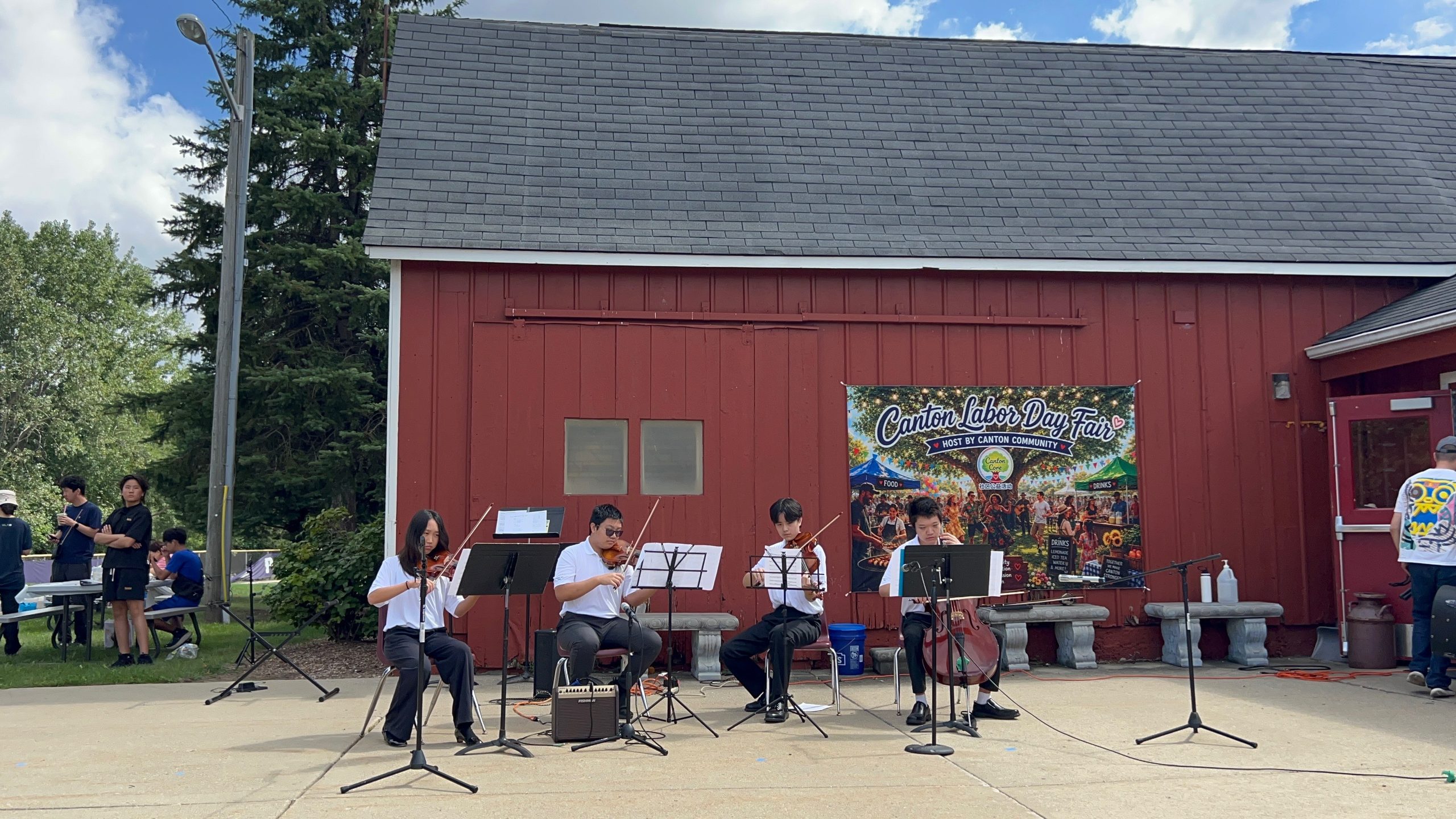
    A few weeks later, the quartet arrived at a local senior living facility for a performance. Dressed in matching polos bearing the revised title, they set up their music stands and launched into a repertoire of traditional Chinese quartet pieces and classical works. The project had evolved into more than a community concert series; it became a practical exercise in leadership, professional integrity, and institutional compliance.From the first guest arrival to the final toast, live strings bring warmth, polish, and a little bit of magic to a wedding day. The Green Strings Quartet creates an elegant soundtrack that feels personal, joyful, and completely at home in your celebration.
  • Introduction to the work: Jasmine Flower

    Introduction to the work: Jasmine Flower

    “Mo Li Hua” (Jasmine Flower) is a famous Jiangsu folk song often called China’s “second national anthem.” Its melody dates back to the Ming Dynasty and was later adapted into the popular version known today by musician He Fang. The song has achieved global recognition, notably being featured in Puccini’s opera Turandot and served as a cultural symbol at major international events like the Hong Kong handover and the Beijing Olympics.

    Musical Characteristics :

    • Traditional Pentatonic Scale: Built on the traditional Chinese five-tone pentatonic scale (Gong, Shang, Jue, Zhi, Yu, which roughly correspond to Do, Re, Mi, Sol, La), giving it a distinctively authentic and timeless Chinese flavor.
    • Flowing and Lyrical Melody: The melody is smooth, elegant, and gently winding. It perfectly captures the delicate and pure nature of the jasmine flower itself.
    • Expressive and Subtle Lyrics: The lyrics use subtle, poetic metaphors to convey deep, tender emotions and a genuine appreciation for innocent beauty.