“Blooming Flowers and Full Moon” is one of the most celebrated and timeless masterpieces of Chinese traditional instrumental music. Composed originally in 1935 by the legendary Chinese musician Huang Yijun (at just 20 years old), it began as a short piece heavily influenced by the Jiangnan Silk and Bamboo (江南丝竹) regional tradition. In the mid-20th century, the visionary master conductor Peng Xiuwen adapted it into a grand national orchestral arrangement, which dramatically enhanced its rhythmic vitality and instrument variety, elevating it into a definitive classic of modern Chinese orchestral repertoire.
I. Comprehensive Musical Style & Structure Analysis
The piece expertly achieves a seamless fusion between traditional Chinese modal aesthetics and Western structural frameworks, creating a highly scannable yet intricate architectural form:
- Ternary Formal Structure (ABA’): The work utilizes a highly structured Western classical ternary form—specifically, a single three-part form with a recapitulation.
- The Traditional Five-Tone System: Grounded purely in the Chinese traditional pentatonic scale (Gong, Shang, Jue, Zhi, Yu / 宫、商、角、徵、羽), the melody carries an undeniably authentic Chinese color. It wonderfully pairs the delicate, fluid, and flowing characteristics of Southern Chinese folk styles with the proud, bold, and energetic sonic profiles of Northern traditions.
II. Artistic Imagery and Cultural Iconography
The aesthetic mastery of “Blooming Flowers and Full Moon” lies in its ability to translate visual metaphors deeply embedded in Chinese literature into pure acoustic imagery:
- Visual-Acoustic Translation: The music masterfully creates a tone poem of a pristine spring night. The smooth, sustained string legatos evoke the shimmering, peaceful glow of a massive silver moon casting light through moving clouds. Concurrently, the fluttering ornaments of the bamboo flutes mimic a soft evening breeze rustling through heavy, fragrant floral branches.
- The Metaphor of Completeness: In Chinese cultural psychology, the title is a sacred idiom. “Blooming Flowers” (花好) reflects life peaking in breathtaking beauty and vibrant prosperity, while the “Full Moon” (月圆) acts as the supreme symbol of mathematical perfection, harmony, and flawless human reunion.
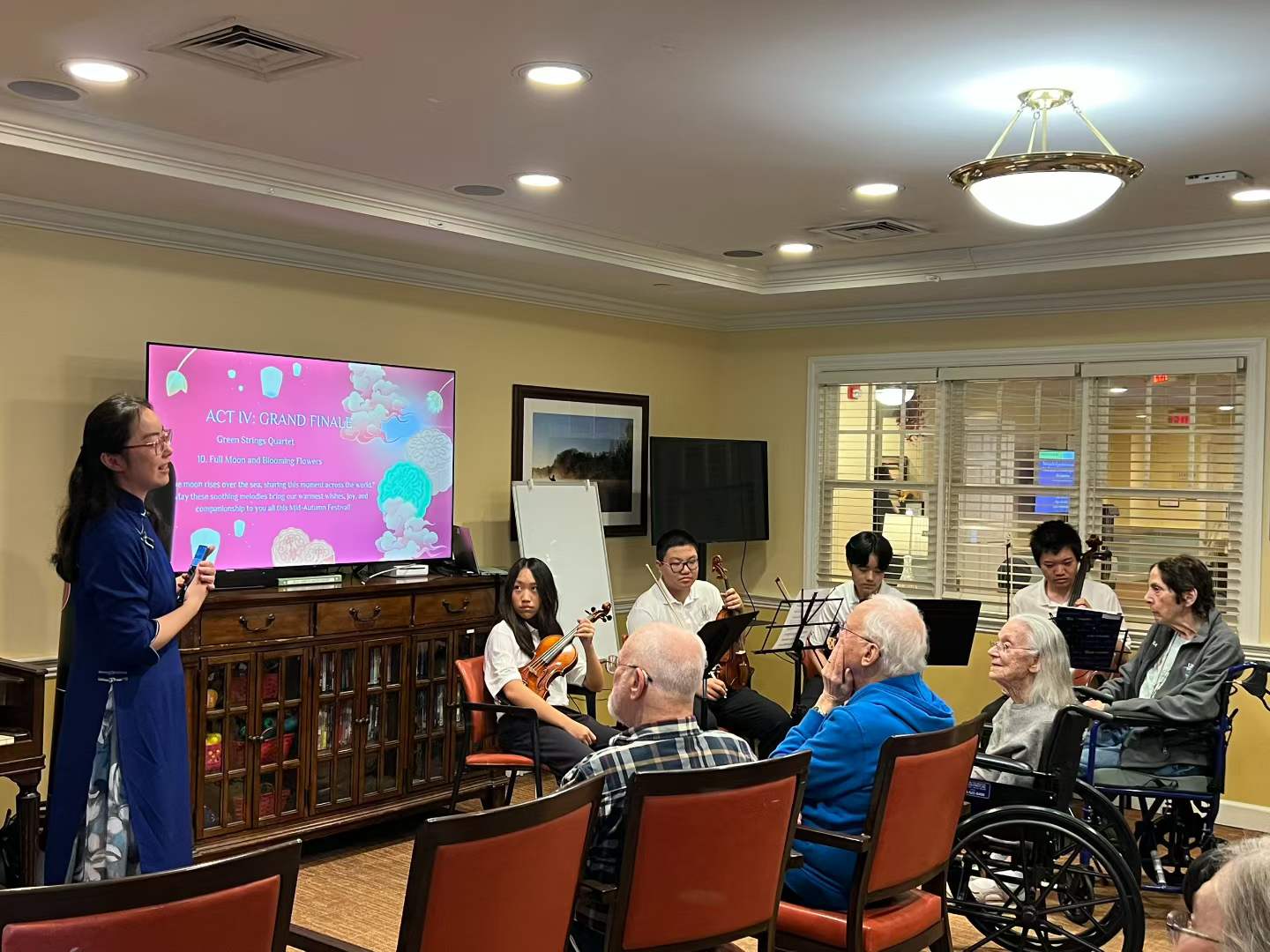
- The Pulse of Cultural Celebration: Because its energetic, uplifting 2/4 time signature and robust brass/percussion dynamics generate an undeniable sense of collective euphoria, the piece has moved far beyond the concert hall. It has become an essential cultural anthem across the globe, routinely played as the signature encore or grand finale during the Lunar New Year, the Mid-Autumn Festival, and highly prominent diplomatic gala events to wish the world peace, unity, and a flourishing age.